Developing the human capacities that enable wiser leadership and fuller participation in work and life.
Working Together
The greatest leadership challenges are rarely solved by more knowledge alone.
They invite us to develop new ways of seeing, relating, discerning, and participating.
For more than fifteen years, I have partnered with leaders, organizations, schools, and governments to support this kind of development. My work combines developmental coaching, leadership advisory, facilitation, and the emerging inquiry of The Availability Project to help people cultivate the capacities that allow them to lead with greater clarity, resilience, wisdom, and humanity.
Whether I'm working with an executive navigating complexity, a leadership team strengthening trust, or a school committed to developing people alongside performance, my focus remains the same:
Helping human beings become increasingly available to reality, so they can participate more fully in the work they are called to do.
Below are a few ways we can work together.
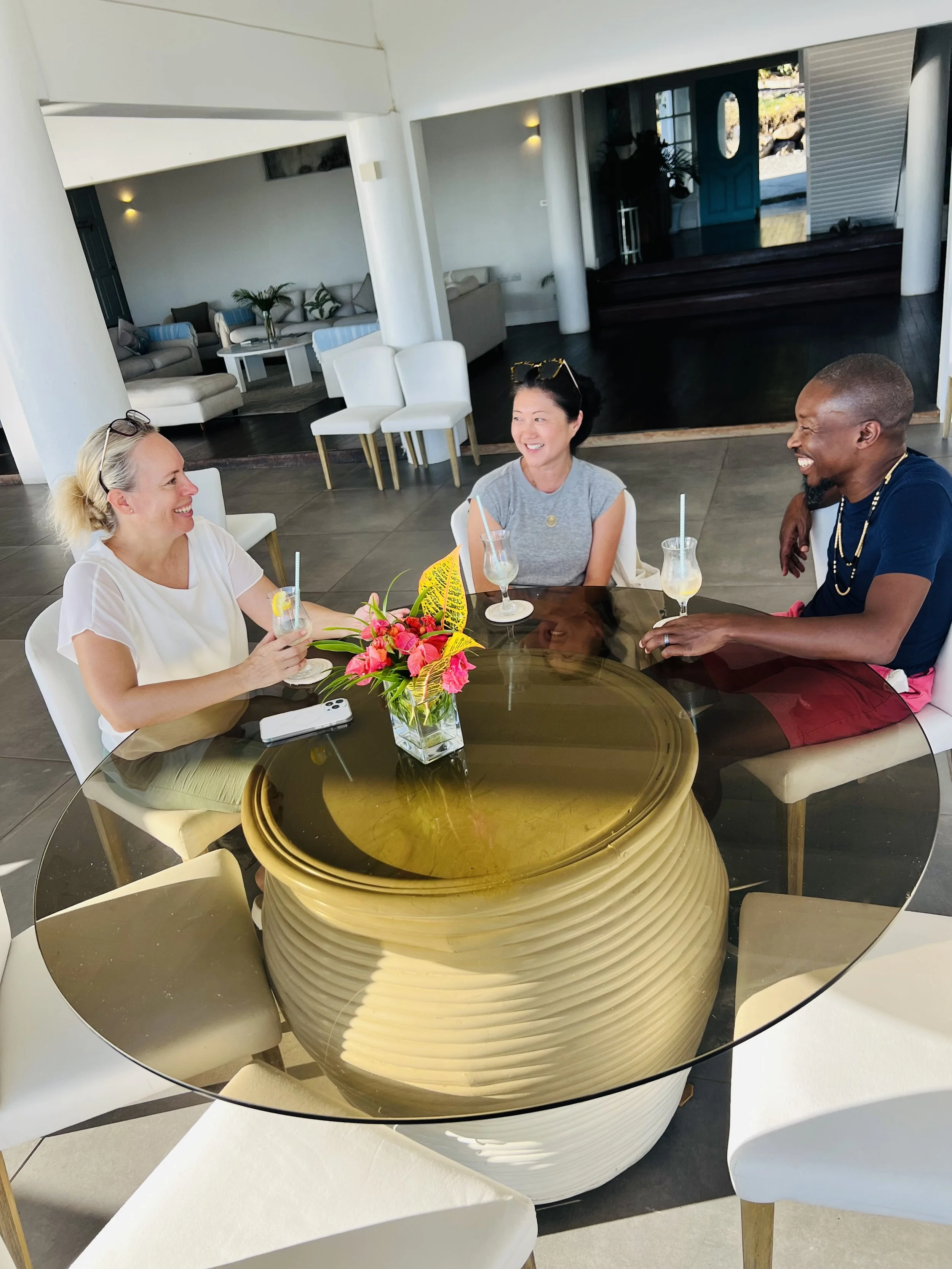
What We Offer
Most experiences, including workshops, programs, and talks, on maturity or leadership presence stay at the level of inspiration — a good feeling that fades by Monday. This work is built to outlast the room it's delivered in.
Drawing on dr. akasha's theory of human maturity and two decades of facilitation across the Caribbean, North America, and Europe, these offerings give audiences a working framework they can actually think with afterward — language for something many of them had only sensed before, and a genuinely honest question about what maturity, leadership, and full participation actually require. Content is shaped to the audience and context, not delivered as a fixed talk: a leadership offsite, a university lecture, and a government retreat each become a different entry point into the same underlying inquiry.

Executive & Leadership Advisory
Who this is for: Executives, founders, public leaders, and teams facing decisions or transitions that competence alone won't resolve — succession, burnout, a leadership identity that no longer fits the role, a team that needs something different from them than it used to.
What it looks like: A one-on-one developmental partnership, typically 6 months, meeting biweekly/monthly. We begin with a written exchange to understand where you're stuck and what's actually at stake, then move into ongoing sessions that track real decisions and real friction as they arise — not a fixed curriculum.
What's different: Most executive coaching optimizes performance within your current way of operating. This work looks at the operating system itself — the capacities (perceptual, relational, somatic, not just cognitive) that determine what you're able to see, feel, and choose under pressure.
How we begin: Start The Conversation →

Organizational Development
Who this is for: Organizations whose culture is quietly working against the leadership and collaboration they're trying to build — where the strategy is sound but something in how people show up to each other isn't.
What it looks like: Typically begins with a listening/diagnostic phase, followed by a working partnership with leadership and teams — workshops / embedded coaching / advisory sessions, shaped by what's actually present in the organization rather than an off-the-shelf model.
What's different: I don't import leadership models into a culture; I listen the model out of the culture. What builds capacity in a Grenadian ministry looks different from what builds it in a European tech company — the work respects that difference rather than flattening it.
How we begin: Start The Conversation →

Educational Systems Leadership
Who this is for: Schools, ministries, and universities committed to developing whole human beings alongside academic outcomes — not instead of them.
What it looks like: Partnership structure — advisory to leadership, faculty development, systems-level work — with typical engagement length of 6 months.
What's different: Academic excellence and human maturity are usually treated as competing priorities. This work treats them as the same project.
How we begin: Start The Conversation →
Speaking & Facilitation
Who this is for: Conferences, leadership retreats, universities, and organizations who want their audience to leave not just informed but genuinely reoriented — toward a more honest question about what maturity, leadership, and full participation actually require.
What it looks like: Keynotes, retreat facilitation, and multi-day learning experiences built around the core inquiry — what enables people to participate more fully in life? Content is shaped to your audience and context rather than delivered as a fixed talk: a leadership offsite, a university lecture, and a government retreat call for different entry points into the same underlying work.
What's different: Most talks on maturity or leadership presence stay at the level of inspiration — a good feeling that fades by Monday. This work offers a working framework audiences can actually think with afterward: distinctions like the difference between availability as a fleeting state and availability as a capacity that can be built. People leave with language for something they'd only sensed before.
How we begin: Start The Conversation →
What Sets Us Apart
We begin by understanding your current reality. Through conversations, observations, assessments, and reflection, we explore the opportunities, challenges, assumptions, and patterns that are shaping your leadership, team, or organization.
The goal is not to diagnose problems, but to learn how to see more clearly.
Discover
Together, we identify the human capacities that will make the greatest difference.
These might include greater self-awareness, emotional regulation, discernment, perspective taking, communication, trust, resilience, collaboration, or the capacity to lead through uncertainty.
Development is always connected to the real work you are already doing.
Develop
Growth happens through practice.
Participants apply new ways of seeing, thinking, relating, and leading to real situations between our sessions.
Coaching, reflection, dialogue, and experimentation help transform new insights into sustainable leadership practices.
Practice
Integrate
As new capacities become more stable, they become part of how people naturally lead, relate, and make decisions.
The goal is not temporary performance improvement, but lasting development that continues long after our formal work together concludes.