What enables us to participate more fully in life?
A theory and practice of human maturity — for people responsible for others' growth, and their own.
You have seen this happen:
The meeting where everyone agrees, yet nothing is decided.
The talented leader who cannot receive difficult feedback without shutting down.
The team that works well until things get difficult, and then can't reach each other.
The person who knows what they need to do, yet does something else.
These are rarely competence problems. The people involved are capable, experienced, and trying. Something else is getting in the way.
What we mean by maturity
In moments like these, reality is trying to reach us. A piece of feedback. Another person's experience. A change we didn't expect. A truth we would rather avoid.
Sometimes it lands. Often it doesn't.
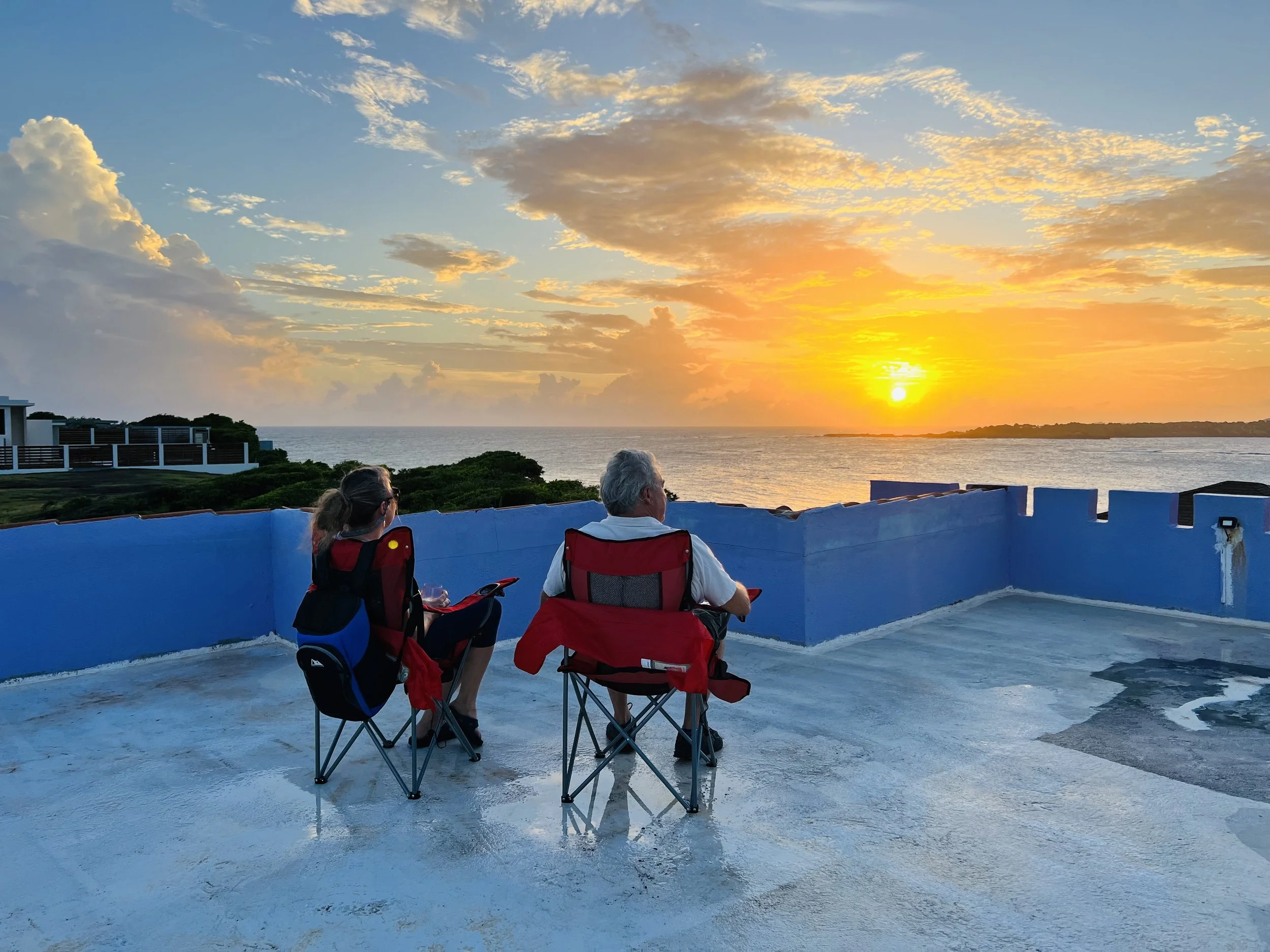
Human maturity
is our growing capacity to be reached, to return after we close, and to participate more fully in life.
None of us are permanently open to life, nor should we be. We all close down, or off, at times. Sometimes wisely. Sometimes protectively. Maturity is not never closing. It is finding our way back more quickly, more consciously, and more often.
This inquiry explores how that capacity develops through different dimensions we explore in our work - perception, emotions, relationships, body, and sense of self, and how we can strengthen it in everyday life.
The Human Maturity Institute exists to study that question of what enables us to participate more fully in life, and to build practices and offer experiences that help us live into some answers.
Being reached and informed by what is happening, while retaining agency is what we call
availability.
What we do with what reaches us is participation.
They belong together. They are a developmental rhythm. As our availability grows, we can participate more wisely. As we participate, life offers new experiences that continue to stretch and deepen our availability.
Human maturity is this ongoing movement: becoming increasingly available to participate more fully in life.

Where it fits in your work

For yourself
The Snapshot shows you a pattern. It cannot tell you what the pattern is for — what it protected, what it cost you, or where movement is actually available right now. That takes a conversation.

For the people you develop
Coaches and facilitators can use the Snapshot with clients. It's free, it takes thirty minutes, and it gives your client language for something they've been circling without being able to name.
Testimonials

For your team
Under pressure, teams stop hearing each other, stop saying the difficult thing, and start managing rather than meeting. It's rarely a skills problem. It's usually that the conditions have made openness very expensive.
How available are you?
Take The Availability Snapshot™
You know the moment. Someone says something you would rather not hear, and something in you closes. You are still in the room. You are no longer in the conversation.
This is a free, 30-minute look at where that happens for you, how long it takes you to come back, and one thing to practise.
Free · About 30 minutes · No total score · Nothing you write leaves your device
For people in transition · leaders who want a clearer read on themselves · coaches and facilitators looking for a tool that develops people
If you develop others, there is also a practitioner pathway →
Take it for yourself first, when you can actually sit with it for 30 minutes, or leave it for a day when you can.
Evidence
From day one of a three-day executive programme organized by Sagicor Cave Hill School of Business and Management, UWI:
"We had experienced HR leaders in the room, but we did not want to give them another HR programme... What distinguished dr. akasha’s contribution was his ability to move the conversation beyond concepts and frameworks and into the more uncomfortable realities of leadership — power, influence, identity, organisational dynamics and how leaders themselves show up within those systems. You created the kind of space where experienced professionals felt able to be candid, rather than simply giving the 'right' executive answers... That shifted the conversation from 'what needs to change?' to 'how might I need to lead differently?’”
~Mikaila Collymore (Ms.)
Programme Development Officer
on behalf of the Sagicor Cave Hill School of Business and Management
The University of the West Indies, Cave Hill Campus
Pilot Practitioner Program Is Live
A 3-month experience for people responsible for the development of others - coaches, facilitators, educational leaders, public service leaders who want to integrate the Availability Snapshot into their client work. We’re currently running a founding cohort. Our next cohort starts in January 27, 2027. Applications close December 31, 2026.
The Inquiry
This is an active inquiry, not a finished model.
The Institute runs an ongoing observational study of human maturity — structured field observation across five domains, currently drawing on work with coaching clients, governments, schools, and organizations. It's why the work isn't off-the-shelf, and why what I bring to your context is shaped by your context.
This inquiry explores questions like:
What capacities become increasingly stable as people mature?
How does attention shape participation?
What makes us available to reality?
How do individuals, leaders, schools, and organizations cultivate maturity?
What practices deepen our participation in life?
How might human maturity become one of the central aims of education, leadership, and society?
These are working questions.
The inquiry remains open.
“akasha’s opening keynote for the Purposeful Planning Institute set the stage for a week of deep engagement and meaningful connection. I still strive to ‘listen to see,’ which has made all the difference. Without hesitation, I’d recommend akasha to keynote a large event.”
Human maturity is more than an idea. It is lived.
This work is grounded in my doctoral research on identity, liminality, and adult development, as well as over a decade of watching it play out in real people's lives.
For the past two decades, I have coached growth-oriented individuals, leaders, educators, executives, entrepreneurs, and communities across the Caribbean, North America, Europe, and beyond.
Alongside this work, I've learned from contemplative traditions, Indigenous communities in the Amazon, adult development research, neuroscience, leadership practice, and my own life's unfolding.
The work has its roots in the Caribbean and branches out into the world.
Field Reports:
Observations About Human Maturity